Description
Background
The determination of relative plutonium isotopic concentrations through non-destructive assay is a fundamental requirement in most waste management and safeguards applications. Historically, it has been one of the more difficult measurements, plagued by mitigating factors like complex samples, varying container shapes and materials, and other complications.
Improving Accuracy with Modern Methods
Multi-Group Analysis (MGA software) improves the accuracy of these measurements over traditional methods. In addition to the primary application of measuring Pu isotopics, MGA can be used to determine other actinides such as 235U, 238U, 237Np and 241Am.
Mirion's MGA software is designed to improve measurement results in challenging Waste and Decommissioning & Decontamination (D&D) applications, which often involve low-activity measurements on large containers. The technology simplifies setup and calibration steps, making it suitable for a wide range of routine, repetitive measurements. This makes it versatile for various applications.
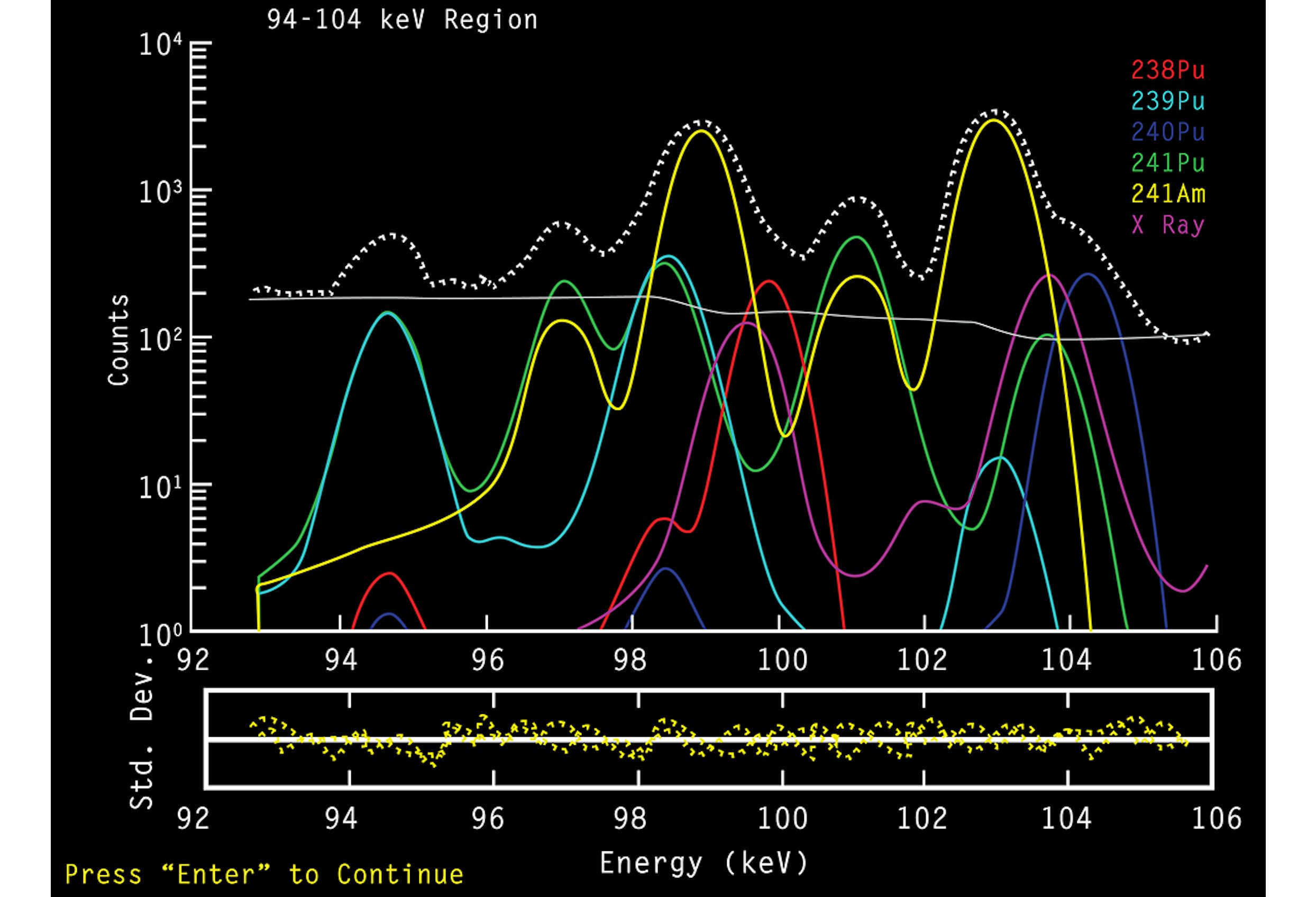
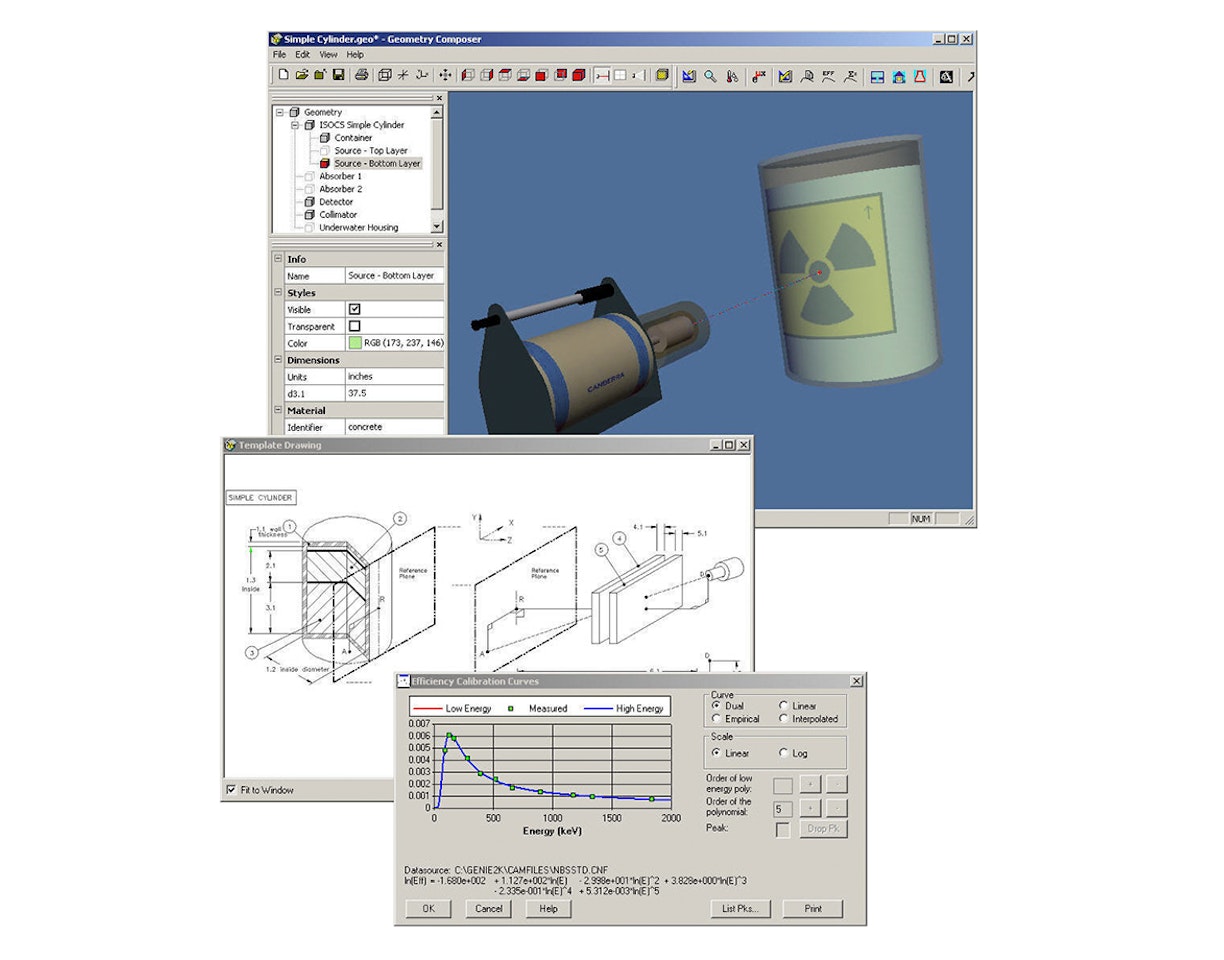
MGA software internally develops an intrinsic efficiency curve based on several energy lines from three isotopes. The efficiency curve takes into account the physical processes that affect the observable gamma ray intensities at different energies, such as the detector efficiency as a function of energy, and gamma ray attenuation in absorbing materials between the sample and the detector as well as within the plutonium sample itself. Using the energy, shape and intrinsic efficiency information, the software calculates a response spectrum consisting of peak energies (positions), relative peak intensities and an accurate peak shape of each peak in the 94-104 keV peak region. Accommodation is made for the Gaussian broadening of gamma ray peaks and the Lorentzian shape of the x-ray peaks. Isotopic concentrations are directly calculated for all Pu isotopes, except 242Pu which is derived from the other isotopes.